
Moldy Tapes from Goa #3
The cassette era ushered in a wave of exciting collaborations, something that was far less common during the vinyl era. With artistes funding and producing their own cassettes, they enjoyed greater creative freedom, especially when choosing whom to collaborate with.
Alfred Rose was a prolific Goan composer whose songs explored a wide range of themes like social issues, love, the Konkani language, current affairs, and light-hearted observations of everyday life. Over the course of a remarkable career that produced thousands of songs, he released 40 cassettes. Accompanying him on this extraordinary musical journey was his wife, Rita Rose. From the tiatr stage to the recording studio, the duo built a devoted following, with their songs continuing to resonate with audiences both in Goa and across the Goan diaspora.
It was almost as if Alfred Rose had declared, “Maestros, assemble,” gathering an extraordinary group of musicians into the studio for this cassette – his sixth.
Unsurprisingly, the line-up features a long list of violinists. Following King John III of Portugal’s 16th-century decree mandating that every Goan parish establish a school, music became part of the Escola Paroquial (Parochial School) curriculum. Students were taught solfeggio, and more often than not, the instrument they first learned was the violin. It is therefore no surprise that generations later, Goa produced such a remarkable number of violinists.
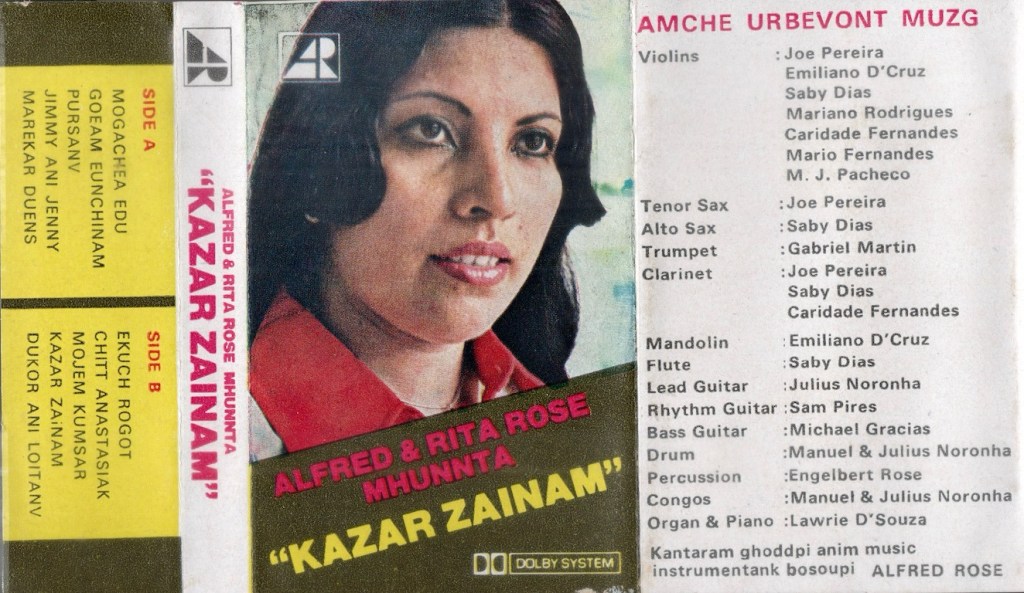
Among the musicians who shaped this recording, Joe Pereira better known as Jazzy Joe, stands out as the most recognisable name. Born in Calangute, he was part of that remarkable generation of Goan musicians who carried their talent far beyond the shores of Goa. He performed from Lahore to Calcutta to Bombay, and across the world. Though he began learning the violin as a young boy, he went on to master the saxophone and clarinet, undoubtedly influenced by his cousin, the legendary Sebastian D’Souza, whose work as a saxophonist and arranger left a mark on Indian film music.
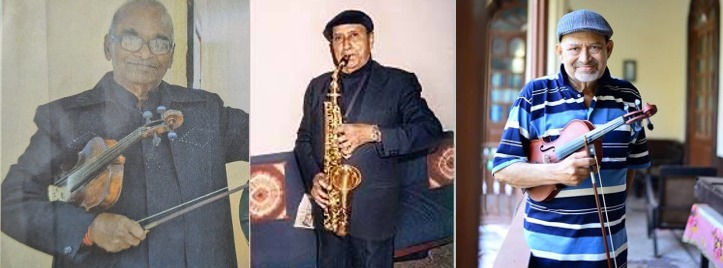
Equally significant was Caridade Fernandes, known as Maestro Babush. Born in Arambol, he moved to Bombay at a young age and quickly immersed himself in the city’s vibrant music culture. When I had the privilege of meeting him before his passing in 2025, he shared that it was Alfred Rose who gave him the name “Babush.” He began by playing for tiatrs before moving into the hotel circuit, performing at venues such as the President Hotel and the Gaylord Hotel in Bombay. Over time, Babush became one of the defining musical voices of Konkani cassette culture. For decades, he composed and arranged music for Goan and East Indian productions in Bombay and in Goa. If one were to reach into a box of old Konkani cassettes, chances are the music would be by Babush or by his contemporary, Mariano Rodrigues.
Mariano Rodrigues, from Chorão, worked full-time for the Railways, with his office located in Churchgate, Bombay. Alongside this, he carved out a parallel journey through the Bombay music scene and, for a time, performed Goan music at the Goa Portuguesa hotel in Mahim, Bombay. His journey began by playing the violin at feasts, litanies, and tiatrs before moving into arranging music for cassettes, where he also played the guitar. He holds the distinction of being the music arranger for the very first Konkani cassette ever produced – Alfred Rose’s Konkani Album No. 1.
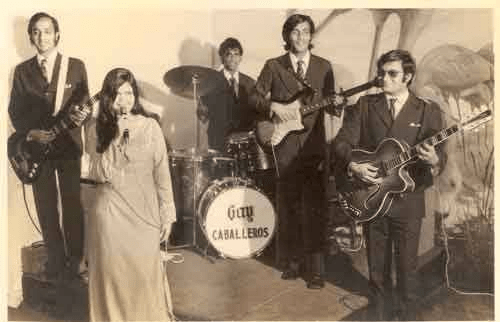
Completing this remarkable line-up was Emiliano da Cruz of Curtorim, another towering violinist who also mastered the mandolin. Like his peers, he was part of the generation of Goan musicians who moved fluidly between the stage and recording studios in Bombay. Sebastian D’Souza, the legendary Goan musician and arranger in the Indian film industry introduced Emiliano to film music as a violinist.
Aside from film music, his band, Gay Caballeros, performed in late 1960s Bombay at the Flamingo Hotel, Heritage Hotel, and the Taj President Hotel. They also played for Parsi weddings, Mando Festivals and Carnival dances in Goa organised by Clube Nacional and Clube Vasco-da-Gama.
Remo in a tribute to Emiliano da Cruz on his passing wrote “But what struck me most was his confident mastery and crystal sound on the electric guitar. I remember the guitar itself so well; it was a glittering, pinkish purple. And the sound was a wholesome, full-bodied tone which was all his own. It was his own because it came from his right hand’s position somewhere close to the beginning of the neck, a legacy from his mandolin playing.“
Other notable names in the musicians’ line-up include Manuel and Julius Noronha on percussion. They are the sons of another maestro, Cruz Noronha, widely known as Cruz Jazzwalla. Also contributing on percussion is Engelbert Rose, the son of Alfred and Rita Rose.
Engelbert Rose was still very young at the time and recalls playing the bongos in the studio: “I had fun playing the bongo especially with all the musicians playing their parts in the studio. There were not many tracks in those days and any mistakes by any one resulted in the song having to be done again from the beginning, this was very rare as the musicians were all readers of music notation.”
He also shared insight into his father’s songwriting process: “Dad was a Songwriter, Singer, Music director, Music Producer and Musician as he knew to play the violin and guitar too. He used to use the violin to write his music notations.”
Together, these musicians represent more than just a recording session. They embody a significant chapter in Goan musical history. Rooted in parish-school violin training, shaped by Bombay’s music scene, and amplified by the cassette era’s creative freedom, they went on to transform the Goan musicscape.
For this recording, Alfred Rose had assembled a group of maestros, much like a conductor gathering the finest players for an orchestra, each bringing his own artistry into the studio.
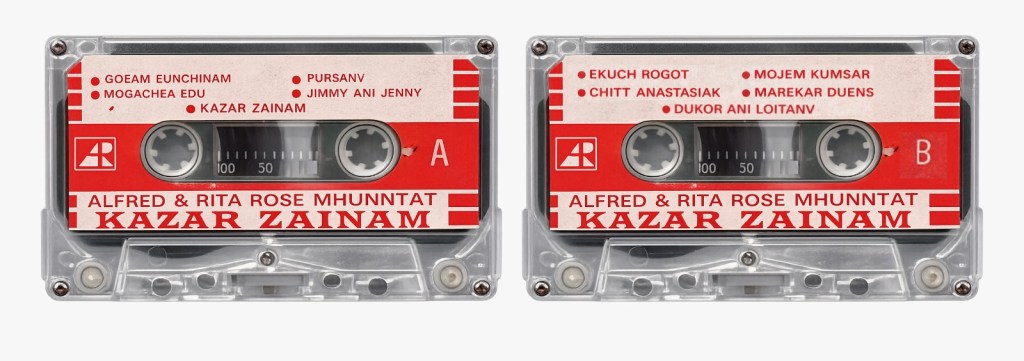
Coming to the music on the cassette, Alfred Rose wrote both the lyrics and music for all the tracks, with his wife Rita Rose joining him on vocals.
Side A opens with Alfred and Rita Rose singing the duet Goeam Eunchinam (Won’t come to Goa). Interestingly, the inlay card lists this as Song 2 – one of several mistakes in the printed tracklist. Fortunately, the sticker on the cassette itself carries the correct order of songs.
Next comes Rita Rose with Mogacho Edu (“Dear Edu”), a song that must have resonated with the many Edwards across the Goan diaspora. The chorus goes: “Edward tujem nam punn mogan tuka mhunnta Edu” – “Your name’s Edward, but I lovingly call you Edu.” Rita Rose told me that the song was inspired by a real individual named Edward. The track is also notable for the prominent mandolin playing of Emiliano da Cruz, whose distinctive style is hard to miss.
Another track that listeners will immediately recognise is Jimmi ani Jenny, the Konkani adaptation of Don’t Cry Joni by Conway Twitty and Joni Lee. Reimagined as a duet between Alfred and Rita Rose, the song came about because Rita loved the original and asked Alfred to create a Konkani version. The result preserved the emotional arc of the country classic while translating it into a distinctly Goan setting.
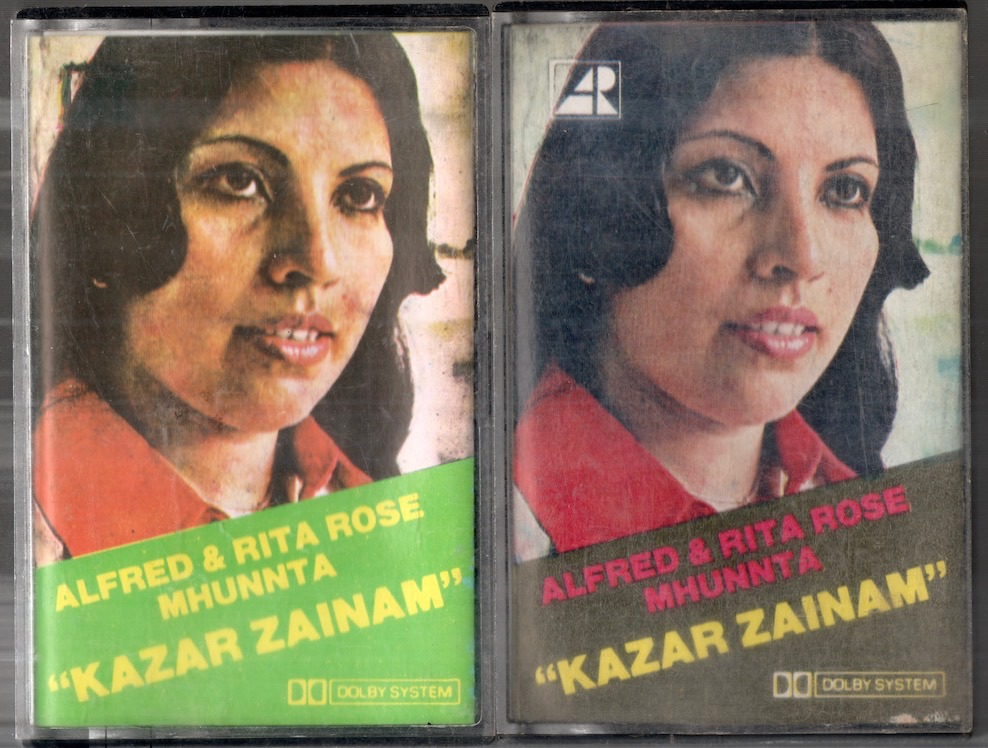
The most compelling story, however, belongs to the title track, Kazar Zainam (“Not Getting Married”) that closes Side A. A fellow Cantaram aficionado, Edward Verdes, recalls “Kazar Zainam is one of the best duets sung by Alfred Rose and Rita Rose. I watched them perform it live for a tiatr in Mumbai…the audience was stunned. The act they put on stage felt like a real-life scene.”
The song opens with a marriage ceremony of Christopher and Gloria. A priest can be heard officiating the ceremony, a scene Goans would be familiar with. However, when the priest asks the bride if she would take the groom to be her husband, she replies “Na, anv taje lagin kazar zaiman” (“No, I will not marry him”). At that moment the dialogue breaks into a dramatic duet, with Alfred Rose singing the part of the groom and Rita Rose the part of the bride.
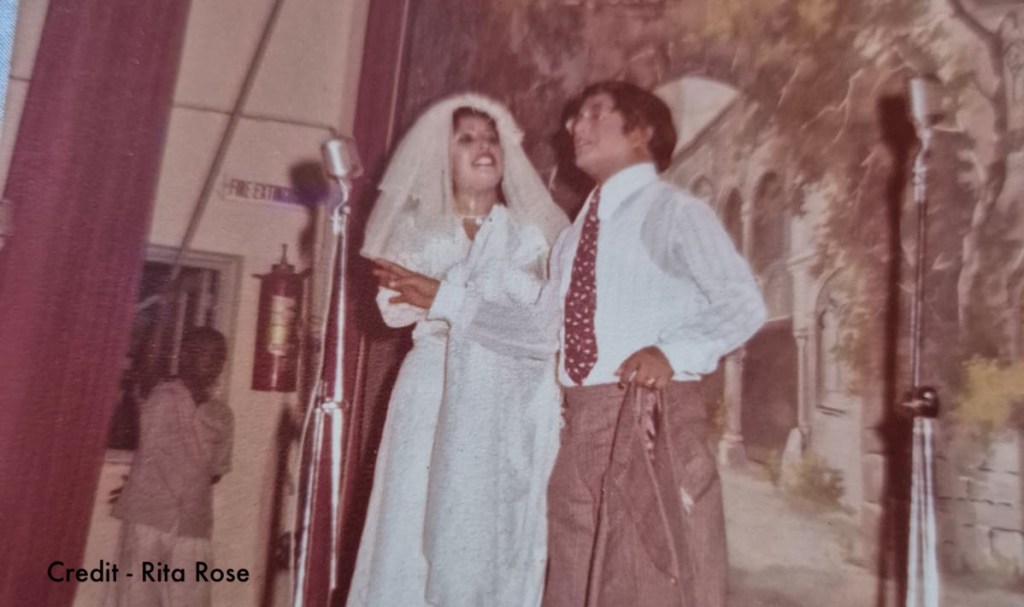
When the song was released, many listeners believed that the song was inspired by a real incident in Goa in which a bride refused to marry the groom at the altar.
Rita Rose herself shared another detail about this song – the priest’s dialogue heard in the recording was delivered by a real priest, Father Agnelo, whom Alfred brought into the studio specifically to record those lines.
Originally, the song had been sung by Rita for a tiatr. She remembers the audience’s reaction vividly, “People were really shocked that something like this could be done. They couldn’t believe it. It was a true story, not just fictional.”
Flipping the cassette over, my favourite tracks on Side B are the groovy Chitt Anastasiak (Letter for Anastasia) and the humorous closing track Dukor ani Loitanv (Pig and Pigling).
This cassette did what Alfred Rose’s music often did best – it captured lived Goan experiences and transformed it into song, without softening its drama or its truth.
Tracklist – hyperlinked if the song is available online.
Side A
1. Goeam Eunchinam
2. Pursanv
3. Mogacho Edu
5. Kazar Zainam
Side B
1. Ekuch Rogot
2. Mojem Kumsar
4. Marekar Duens


Leave a Reply