
Moldy Tapes from Goa #1
Top Konkani Hits — the album title is no exaggeration. It truly is a collection of remarkable songs, both lyrically and musically. These timeless tracks are still fondly remembered by Goans around the world.
Having listened to the album on both vinyl and cassette, I was left with questions and theories. And who better to answer them than the man behind this tape himself. I spoke to him over the phone hoping he would be open to meeting me. We met the very next day. As I drove up north along the Mapusa river, I wasn’t entirely sure if I was prepared for the interview, but it was an opportunity I couldn’t pass up.
Jose Maria Mathias Thomas Ignatius D’Souza, known professionally as Joe Rose and who I will refer to as Joe in this article, is one of the few Goan artists whose music has been released across a wide range of formats over the decades; from vinyl EPs and LPs to audio cassettes, CDs, VCDs, and YouTube. His first song to be released on a physical medium was Limboowala, performed alongside Lourdes Collaco and Gladys Alphonso. It appeared on one side of a 1973 EP, featuring music by Manuel Alphonso and lyrics written by Joe himself.
The first Goan Konkani music cassette was released in 1978 by Alfred Rose; no relation to Joe Rose. A year later, in 1979, Joe released his own debut cassette titled Top Konkani Hits. The following year, the album was also issued on vinyl LP—though with a few notable omissions from the cassette version. It was these missing elements that piqued my curiosity and led me to dig deeper into the story behind the cassette.
On the cassette, there’s an introduction in which Joe personally names each kantorist (singer) and musician featured on the album. Between songs, he offers a one-line prelude that sets the stage for what’s to come. Sadly, these spoken segments are absent from the vinyl release, and their absence changes the character of the album. On every Konkani shellac, vinyl record, or cassette released before this one, the names of the entire band were never announced. This is one of those rare cases where the cassette truly outshines the vinyl.
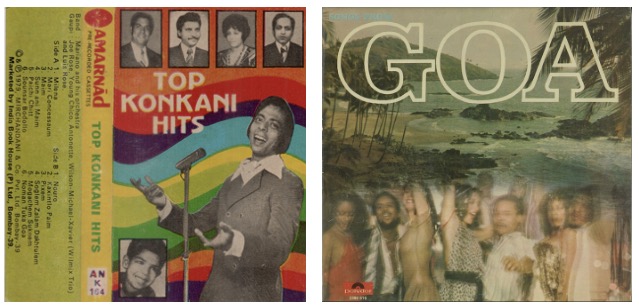
The opening of the cassette begins with an introduction – “Joe Rose tumchea mukar addta, e Konkani Kantaranchi cassette, selected Konkani Hits. Ye cassettein, Joe Rose-ak sangath ditath Young Chico, Antonette, Wilmix Trio – Wilson, Michael, Xavier-acho ani bab Luis Rose. Ya Kantaran, music duipi zaun asa Mariano and his Orchestra. Drum vazoita Abdon, Bass Guitar Archie, Rhythm Guitar Mariano, Electric Organ Marcelis, Trumpet vazoipi Braganza ani Reginald, Sax Bernard ani Saldanha”
This introductions translates to “Joe Rose presents this Konkani Songs Cassette, selected Konkani Hits. On this cassette, accompanying Joe Rose are Young Chico, Antonette, Wilmix Trio of Wilson, Michael, Xavier and young Luis Rose. For these songs, the music is by Mariano and his Orchestra. On drums Abdon, Bass Guitar Archie, Rhythm Guitar Mariano, Electric Organ Marcelis, Playing the Trumpet Braganza and Reginald, Sax Bernard and Saldanha”
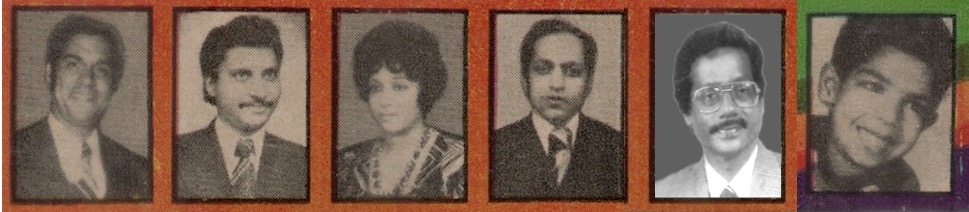
Confirming my suspicions, Joe explained that he was indeed the first to introduce the entire band at the start of an album, something that had never been done before in Konkani music. This novel approach set a precedent during the cassette era, with many Goan kantorists adopting a similar format for their own releases in the years that followed. As a result, this cassette holds a significant place in the history of recorded Konkani music and is the first tape in my Moldy Tapes from Goa series.
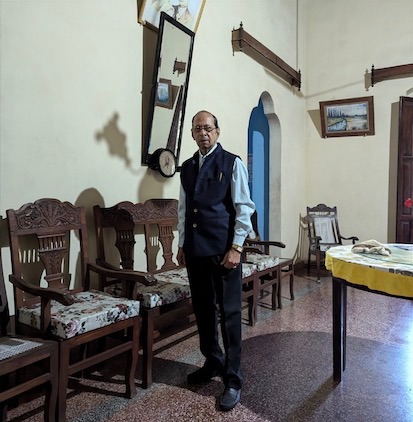
As we sit in his home in Olaulim, Joe recalls the events of 1980 that led to the release of this iconic cassette. He explains that he composed the tunes before collaborating with Mariano Rodrigues on the music arrangement. At home, he would record the melodies on a tape recorder, humming the tune while simultaneously noting the instrumentation for each section. Bars 1 to 8 would specify whether it was a trumpet, or a trumpet and saxophone, and so on.
Mariano, from the island of Chorão, worked full-time for the Railways, with his office located in Churchgate, Bombay. Alongside this, he carved out a parallel journey through the Bombay music scene and, for a time, performed Goan music at the Goa Portuguesa hotel in Mahim, Bombay. His journey began by playing the violin at feasts, litanies, and tiatrs before moving into arranging music for cassettes, where he also played the guitar. After his workday, he would make his way to Joe’s place in Marine Lines, where they would focus on one song each day. Mariano would then add the chords and background music to Joe’s melodies.
The musicians featured on this cassette were all highly accomplished in their own right. Archie, for instance, had played bass alongside Chris Perry. Abdonio Rodrigues from Curchorem had performed with bands at prestigious venues like the Taj Mahal Hotel and Astoria, and he also played drums with Goodi Seevai’s jazz band in Bombay. Reginaldo Fernandes of Siolim, famously known as Konknni Romanxicho Patxai (the “King of Konkani Fiction”), was not only a brilliant trumpeter but also a prolific writer, having authored over 200 Konkani novels.
Although Konkani cassettes had been in circulation for two years prior, Joe received no assistance with his own audio cassette release. He had no prior knowledge of the cassette recording process, and his only experience in a professional recording studio was for the recording of Limboowala, which was released on vinyl in 1973. He recalls purchasing two spools from a store in Bombay’s Fort district, based on Mariano’s suggestion, and then figuring out the process on his own.

The entire album, consisting of 12 songs, was recorded in a single day, from 10 am to 6 pm. All the kantorists and band members were present in the studio that was run by brothers Sandesh and Videsh. Joe recalls that at the time, there was no stereo recording, only mono was available. A Nagra T-Audio Tape Recorder was used for the session. They had to complete each song in just one take, as it was a live recording with no dubbing done later. Mariano was conducting the music in the studio on the fly.
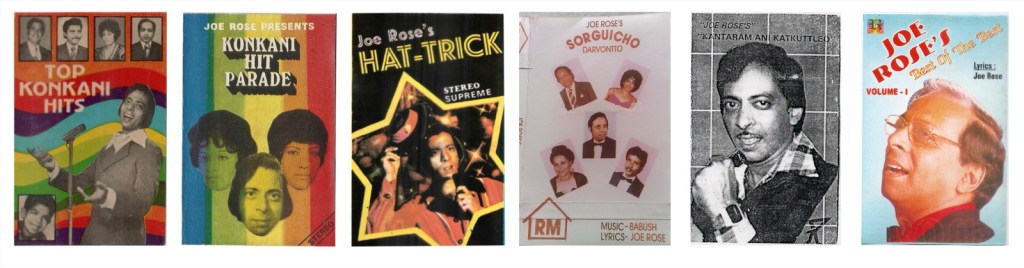
The following day, when he returned to the studio to listen to the recordings, an agent from India Book House (IBH) happened to be there. Although the agent didn’t speak Konkani, he heard the tracks and, impressed, handed Joe his business card, offering to release the cassette. At the time, IBH was distributing devotional cassettes globally, and as a result, this cassette made its way to distant places like Russia as part of the IBH catalog. Joe went on to collaborate with IBH for his second and third cassettes as well.
IBH worked with Polydor to release this tape on vinyl under the title Songs from Goa (1980) . Along with Robin Vaz’s Konkani Unforgettable Hits (1981), this was one of the last Konkani vinyl records pressed in India.

Historically, Cantaram were songs that were first performed in a Tiatr and recorded much later. Tiatr, derived from the Portuguese word teatro (theatre in English) is a Goan cultural expression. The language of the Tiatr is Konkani, that includes dialogues and Kantaram (songs). For the uninitiated, Pramod Kale, in his paper TIATR: Expression of the live, popular culture (1999) states that “Tiatr is a unique performing arts genre. It has elements of drama, music, comedy and improvisation. In a typical Tiatr performance, there is a loose story line which runs through the show. It is punctuated by ‘sideshows’-irrelevant and improvisational material consisting of songs (solos, duets and choruses called cantar), dances, comic skits and monologues-all to the accompaniment of a very loud Goan steel band which sits between the audience and the performers”.
However, this cassette featured many songs that were never sung in a Tiatr, meaning it didn’t have the advantage of being heard live before listeners went out to buy the cassette. Despite this, the cassette became a massive hit. When Joe visited Goa for his Tiatr performances, people would flock to purchase the cassettes, which were priced at INR 25 each.
The songs also received airtime on All India Radio Bombay. Joe recalls lending his copy of the record to an announcer at All India Radio Bombay, but unfortunately, he never got it back.

The first track, Milena, is an upbeat number featuring Young Chico (Francisco Bringel) expressing his love for a girl named Milena. Filled with trumpet interludes, this song serves as a catchy opener to the album. The lyrics were written by Tomazinho Cardozo, though Joe was unaware of this at the time of recording, and hence the album sleeve doesn’t mention it either.
Next is Mari Concessaum, a classic sung by Antonette. In this song, she narrates the life story of Mari—starting from her childhood in Goa, moving through her adolescence in Bombay, and finally, her aspirations to work in the Gulf. The lyrics reflect the challenges faced by women in Goa during that time.
The third track, Maim (Mother), is a slow song featuring a harmonious duet between Young Chico and Joe. The lyrics depict two sons singing about their mother. Unlike the format that songs usually follow, this song opens with the chorus and the verse follows.
The next track and my favorite, Sunn and Maim (Daughter-in-law and Mother), is one that might feel familiar. The song opens with a trumpet melody reminiscent of the keyboard intro from “A Wonder” by the George Baker Selection. Personally, I feel this sampled melody sounds even better with the trumpets and Abdonio Rodrigues’ drum roll at the end. The lyrics explore the dynamics between a daughter-in-law and mother, highlighting how they get along until Lucifer, the devil, sows seeds of discord between them. 25 years later, a music video was released that perfectly visualizes the lyrics. In the opening scene of the video, we see Joe on the iconic Aldona-Corjuem cable-stayed bridge – the first of its kind in Goa.
In Paichi Chitt (Father’s Letter), the vocals are provided by Joe’s young son, Luis Rose. This song features a back-and-forth conversation between father and son.
The final track on Side A is Sounsar Bodollo (The World Has Changed). The lyrics reflect on how the world has changed, covering topics such as modern family lifestyles, women working, drinking and smoking, and even test tube babies. The Trio captures these shifts, which likely mirrored the societal changes of the late 70s. It has a slow melody reminiscent of another Konkani song, Adim Ani Atam by Joao Cardozo, the elder brother of Tomazinho Cardozo. I still haven’t found out which song came first though.
Side B opens with the groovy Nouro (Groom), sung by Young Chico. The chorus includes the lines, “Doth taka naka (doesn’t want a dowry), mog kelearuch puro (love is enough), Cigrett voddinam (doesn’t smoke cigarettes), fors kelear pieta soro (drinks alcohol only if forced).” Joe recalls composing this track while he was in the Gulf.
Next is Kaxintlo Paim (Leg in the Coffin), sung by Joe. The song is accompanied by a dramatic music video that complements the lyrics, which tell the story of a mother and son. Even if you don’t understand Konkani, the video helps convey the message effectively. Once again, the trumpet interludes throughout the song are exceptional. Joe had previously performed this song in Goa for the Tiatr Ghuttachi Batli by the Mendes Brothers. The song was a hit and brought the crowds for repeat shows.
The third track on Side B is Pixem (Crazy), featuring Antonette on vocals. The opening line of the chorus bears a striking resemblance to the tune of Ruby Tuesday by The Rolling Stones. Abdonio’s drumming truly stands out on this track. At Rock in Goa 2024, the band Kantte ani Fullam performed a cover of this song. After the concert, the band leader, Roque Lazarus, remarked, “I chose Pixem because I find the orchestration and musicality of it to be of an exceptionally high level. I just stumbled upon it, and I could write a book on the arrangements and the pure voice quality of Antonette.”
Next up is Soglem Zalam Dakhtulem (Everyone’s Become Small), sung by Joe. The song was first performed at the Alfred Rose Musical Show, a live stage production. Joe fondly recalls stepping onto the stage with a brightly colored miniature umbrella as he sang this number.
Next up is Mogachem Sukhnem (Love Bird), a song originally composed by Joe for a live musical show titled Bekar Patrao, directed by the legendary Frank Fernand. The lyrics were written by Joe himself, while the music was composed by Fernand. Mariano and his band later recorded the song for the cassette release.
Joe fondly recalls how the song came to life. He was at his new flat in Bombay when the doorbell rang. To his surprise, it was Frank Fernand at the door—despite the fact that they did not know each other personally. Fernand had been sent by Rico Rod and had come with a request. He was working on Bekar Patrao and wanted Joe to write three songs for the show. Joe agreed, and Fernand, wasting no time, asked him to start working on the lyrics immediately. He pulled out a tuning fork and made Joe sing to a specific pitch. This was because Fernand already had a particular singer in mind for the stage performance -Adolf Fernandes. He needed the songs to be in the singer’s vocal range, so he had Joe match that pitch.
As Joe searched for inspiration, he noticed a bird flying past the window. Inspired by that moment, he began composing and singing on the spot. Fula sarke rupnem, sobit pakamchem sukhnem. Kalzamchea pinzreant eun boslem, visrlo bond korum dampnem – Looking like a flower, a bird with beautiful feathers, sat in the cage of my heart, and forgot to close the cage door. After just four lines, Fernand said it was enough for the day and asked him to meet again the following day. Mariano, who was part of Fernand’s band, also contributed to the musical. Being part of a Frank Fernand production was a true honour for Joe.
The tape ends with a slow track, Noman Tuka Goa (Salute to you Goa), sung by Wilmix trio. The lyrics describe Goa and all its wonderful aspects. Listening to it today makes you think about how things have changed.
Tracklist – hyperlinked if the song or music video is available on YouTube.
Side A
- Milena (Lyrics – Tomazinho Cardozo; Vocals – Young Chico)
- Mari Concessaum (Lyrics & Vocals – Antonette Mendes)
- Maim (Lyrics – Joe Rose; Vocals – Young Chico & Joe Rose
- Sunn ani Maim (Lyrics & Vocals – Joe Rose)
- Paichi Chitt (Lyrics – Joe Rose; Vocals – Luis Rose and Joe Rose)
- Sounsar Bodollo (Lyrics – Wilson Mazarello; Vocals – Wilmix Trio)
Side B
- Nouro (Lyrics – Joe Rose; Vocals – Young Chico)
- Kaxintlo Paim (Lyrics & Vocals – Joe Rose)
- Pixem (Lyrics – Joe Rose; Vocals – Antonette Mendes)
- Soglem Zalam Dakhtulem (Lyrics & Vocals – Joe Rose)
- Mogachem Sukhnem (Lyrics & Vocals – Joe Rose)
- Noman Tuka Goa (Lyrics – Wilson Mazarello; Vocals – Wilmix Trio)
Music by Mariano & his Orchestra
Drums – Abdonio Rodrigues (Abdon) (Curchorem)
Bass Guitar – Archie
Rhythm Guitar – Mariano Rodrigues (Chorão)
Electric Organ – Marcelis
Trumpets – Braganza and Reginaldo Fernandes (Siolim)
Saxophones – Bernard Fernandes (Nagoa-Bardez) and Saldanha
My gratitude to Joe Rose for the endless hours of conversation as we spoke about everything from music to politics, and to his wife Margaret for the Alle Belle and warm hospitality every time I dropped by and parked myself at their home for hours.
 Kantaram
Leave a comment