
On what would have been Antonette’s 81st birthday, her remarkable legacy on the Konkani stage was celebrated posthumously. Hosted by Ageema Fernandes, the event featured some of Goa’s finest vocal talents, accompanied by an outstanding live band—leaving the audience with hearts full and memories refreshed.
Maria Antonia D’Souza, remembered by her stage name Antonette, started out at a young age as a tiatrist (Konkani stage actor) and quickly went on to direct and write tiatrs too. From Bombay to Goa to East Africa, she lit up stages with her tiatr performances.
Antonette appeared in the second, third, and fourth Konkani films ever produced. At just 16, she featured as a supporting actress in Amchem Noxib (1963), where she is immortalized in several musical sequences. In Nirmon (1966), she delivered a heartfelt rendition of the song Claudia, and in Sukhachem Sopon (1967), she starred alongside the Father of Konkani Cinema, Al Jerry Braganza
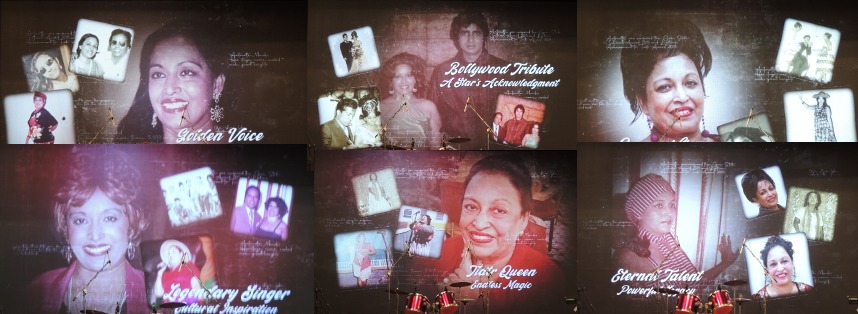
The evening opened with a photographic tribute celebrating Antonette’s remarkable six-decade-long career. To begin the concert, her daughters — the Mendes Sisters, Judy, June, and Lara — took to the stage, each performing songs including a heartfelt dedication to their mother, Marina, and one of my favorites, Tik Tok Typist.

Next, the audience was treated to a surprise appearance by Jose Rod—Antonette’s son-in-law and a beloved icon of the Konkani stage. Later in the evening, he was felicitated amidst thunderous applause and cheers from an audience that clearly missed the legendary performer, best known for his iconic non-stop shows.
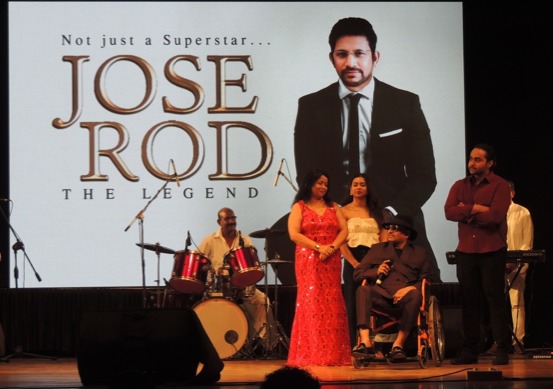
The concert band featured a stellar lineup led by Music Director Senon De Souza on trumpet. Joining him were Nolvert Cota on second trumpet, Semy Braganza on trombone, Daniel on saxophone, Xavier de Moira on drums, Joseph Pereira on lead guitar, Crusandio Pires on bass, and Lenoy Gomendes on keyboard.

Next to take the stage was Neves Oliveira, the ace lyricist behind numerous Konkani songs, including several from Lorna’s newer albums. He performed an original composition, featuring lyrics dedicated to Antonette and the profound impact of her contributions to Konkani music.

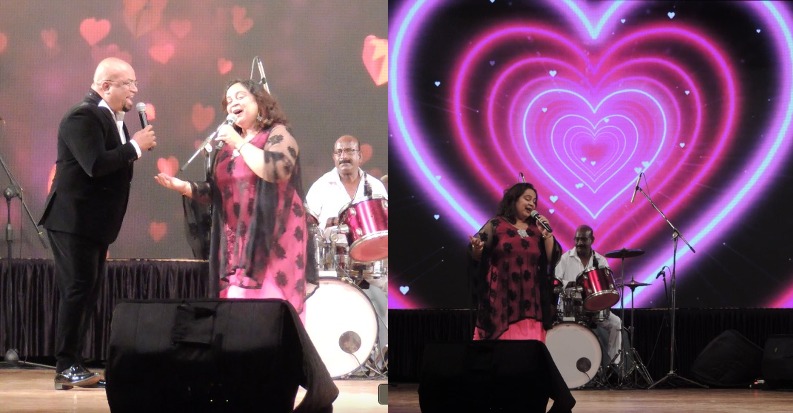
Next up was Goa’s beloved Fadista, Sonia Shirsat, who delivered a soulful rendition of what is arguably Antonette’s most iconic song, Pitti Pitti Mog. She was joined on stage by Lawry Travasso. As always, Shirsat captivated the audience with her performance that evening. This song was released in 1971 on vinyl LP under the album Concanim Hits by Chris Perry and a Host of Stars.
The story behind this song is a well-known one, once shared by Jose Rod during a Chris Perry tribute show. While Perry was working inside a recording studio, Antonette waited patiently outside, hoping to receive a song he had promised her. After waiting for hours, she finally approached him and requested the song, explaining that she needed time to rehearse it. In her heartfelt plea, she told him, “Kantar tu dina te aikon moje kaliz pitti pitti pitti zaunk lagla”. Moved by her words, Chris Perry composed Pitti Pitti Mog in just five minutes.
Up next were Alria Rose and Englebert Rose. The Alfred Rose family has been touring Goa throughout May, performing shows and connecting with fans. As pillars of Goa’s musical heritage, I was happy to see them take part in this tribute concert. Their rendition of Bencdaita Pai was a nostalgic throwback for anyone who remembers Amchem Noxib, the film that featured a young Antonette alongside Anthony Mendes. With lyrics by C. Alvares and music by Frank Fernand, this song marked Antonette’s debut on the silver screen.
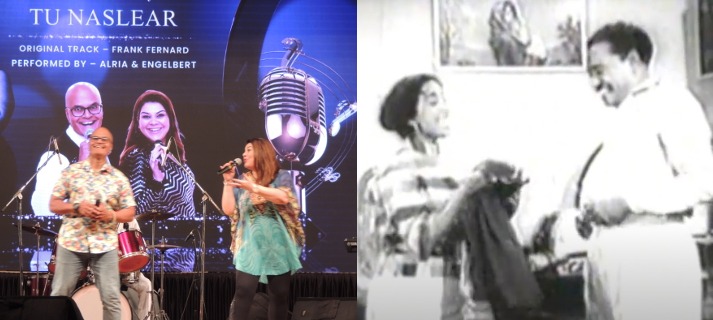
Ageema and Lawry Travasso then performed a ballad Aum Mogan Tujea Podlem. As the duet came to a close, Travasso shared that he never imagined he would have the opportunity to sing this beloved song by Jose Rod.
Next up was Cielda Pereira’s cover of the rock and roll Pixem, from Joe Rose’s first cassette Top Konkani Hits. Antonette vocals on Pixem, paired with Mariano Rodrigues’ music arrangement, are raw and powerful. This song, with Abdonio Rodrigues on drums, has always been a favorite of mine, and I’ve included it in my vinyl selector sets too. Unfortunately, the stage backdrop mistakenly credited the song to Jose Rod instead of Joe Rose. Later in the evening, Pereira also performed Mhozo Ugddas Yetolo.

Clarissa Lobo took the stage next. A rising star and talented saxophonist, she often shares her saxophone renditions of Cantaram on Instagram. When the mic handed to her didn’t work, she wasn’t phased at all. Instead, she confidently delivered a lively rendition of Zolmacho Dis, complete with expressive facial gestures as she sang along. This was the first of three amazing performances from her that evening.
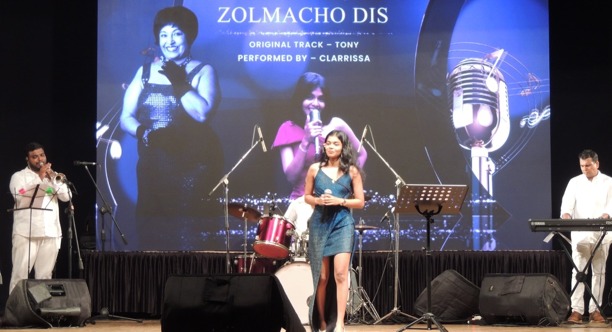
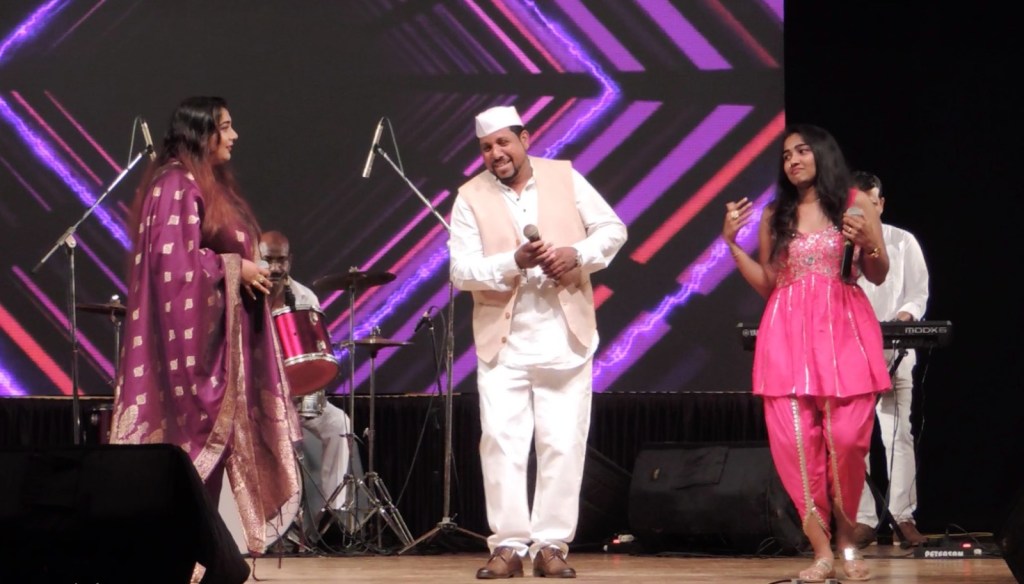
Akki Brown, known for blending Konkani music with a reggae beat, was then joined by Simran and Shanice for their cover of the 1980s hit, Meuni Payje Mala, originally by Joe Rose and Antonette. This track from Joe Rose’s second cassette, Konkani Hit Parade, brought some comic relief to the evening, with Akki delivering a performance that, as always, did not disappoint.
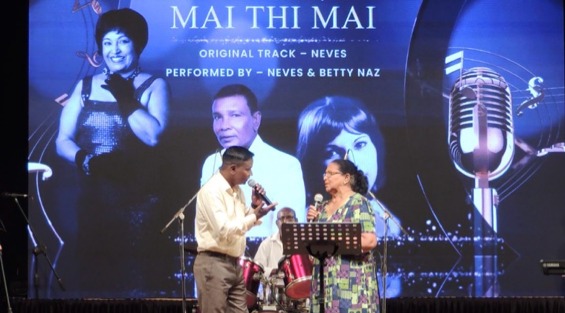
Neves Oliveira and Betty Naz then took the stage for a duet of Mai Thi Mai. Betty Naz, one of Antonette’s contemporaries, has left an indelible mark on Konkani music and film. From her acting roles in films like Boglantt and Jivit Amchem Oxem to her songs featured on cassettes in the 1980s and 90s, Betty Naz is truly a living legend.
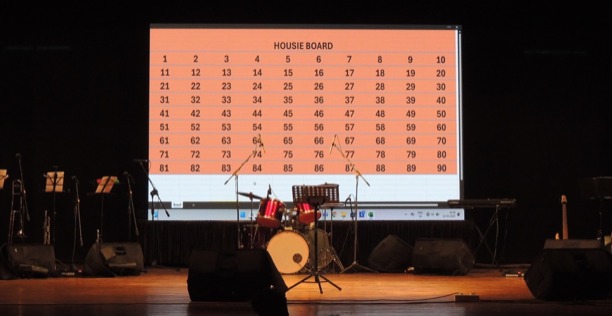
No event in Goa is complete without Housie, and so the music took a brief pause for a round of Jaldi Five. While the event was free, the proceeds were generously donated to Noble Nest Old Age Home – Chinchinim and Nazareth Home – Navelim.

The music resumed with performances by Denzila, Leslie, Savana, and Akki, along with Bernice, who covered Raja Rani. This performance brought to mind another iconic Robin Vaz song, Pipirmit, a track that the audience surely missed on the night.
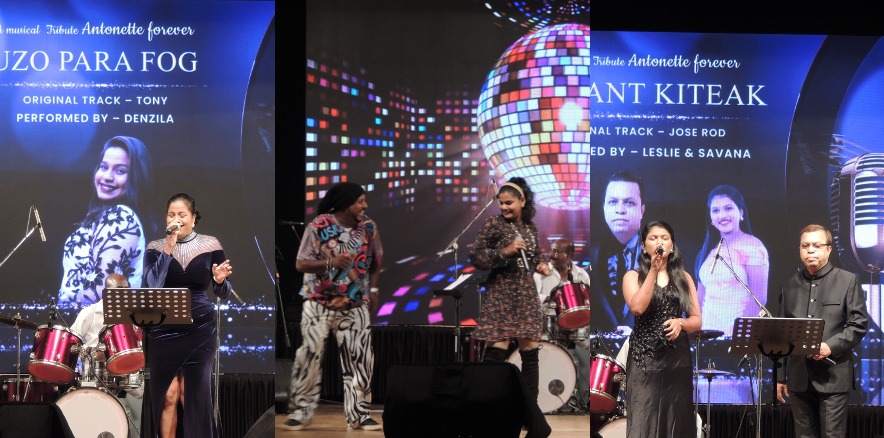
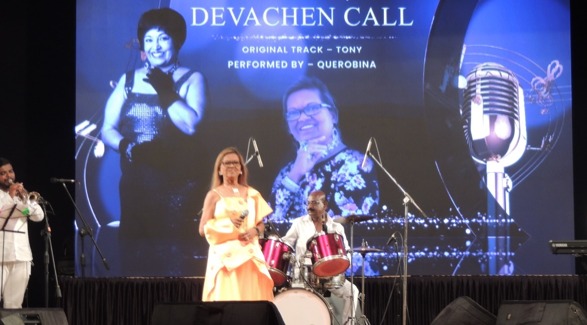
Querobina Carvalho, a renowned comedienne of the Tiatr stage, then delivered a graceful rendition of Devachem Call. Seeing so many prominent figures on stage truly highlighted how much Antonette was cherished by the Tiatr community.
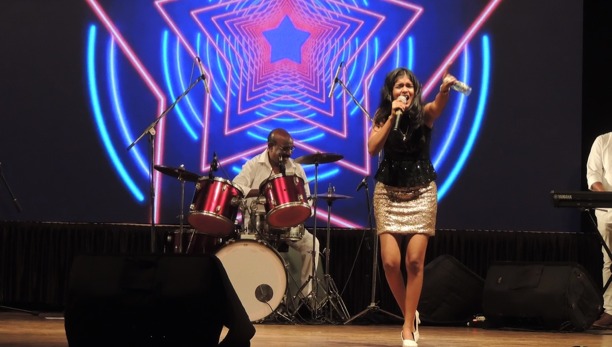
Between the musical performances, Nato and Riston had the audience in stitches with their comedy skits. One particular dialogue, which highlighted the contributions of Alfred Rose, Rita Rose, Joe Rose, and Roseferns, had the crowd clapping in appreciation.

Bottle in hand, Clarissa Lobo returned to the stage for another unforgettable performance. She took on Bebdem, the opening track from Joe Rose’s second cassette, an 1980s classic. Antonette’s vocals, Joe Rose’s lyrics, and Mariano Rodrigues’ music from the original were beautifully honored by Lobo and the band, led by music director Senon De Souza.
Xavier de Moira, known as Packlo, stayed true to the drum beat of the original. A true drummer of the Goan people, Packlo has played everywhere—from village feasts and tiatrs (including college competitions) to musical shows, and even in the Orchestra during the recent Exposition of St. Francis Xavier. A few months ago, he was honored with a Lifetime Achievement Award by the Tiatr Academy of Goa, on the very same spot where he played the drums that evening.
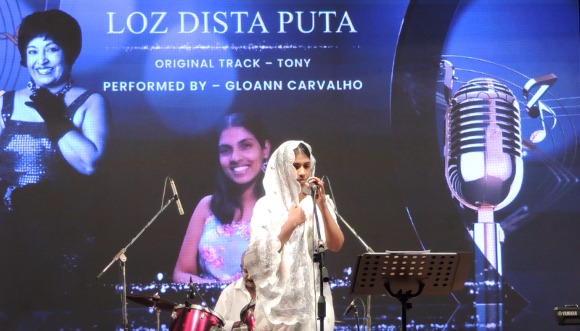
Then came a performance that caught me off guard. Loz Dista Puta is unlike any other Cantaram that came before or after it. If I were to release a ‘single’ from Joe Rose’s third cassette, Hat-Trick, this song from the deep end of side B would be my pick. When you listen to the original, you just know that it was written for Antonette to perform. For me, it’s a slow, jazzy track, and Gloann Carvalho’s cover of it was the highlight of the night. Joe Rose once mentioned to me that this song is a challenge for many singers to cover live, but Gloann Carvalho left no crumbs on stage with her performance that evening.
Loz Dista Puta was inspired by a real incident that Joe Rose witnessed, though not exactly as it happened. The theme of the song is rooted in that event. A middle-aged woman would stand outside the school where Joe Rose taught, holding a tiffin. A girl student would come, quickly grab the tiffin, and shoo the woman away. When Joe Rose asked the student who the lady was, the girl claimed she was just her servant. Later, another student revealed that the lady was actually the girl’s mother. The woman was poorly dressed and had a downcast demeanor, so the daughter felt embarrassed to admit that she was her mother.
The show concluded with a grand finale — a medley of beloved songs that brought the evening to a celebratory close. Judy performed Don Kalzan, followed by Jurament by Jiselle, and Zati sung by Betty Naz, Lydia, Abbey, and Alias. Clarissa delivered a soulful rendition of Claudia with both vocals and saxophone, joined by Mable and Alias. Antonette’s sister, Fatima, also joined the group on stage.
The evening wrapped up with a Canto Doti Magon from M. Boyer’s tiatr Sounsar Sudorlo, a song that addresses the social evil of dowry. The audience was encouraged to sing along with the chorus, ending the night on a high note with a meaningful social message.
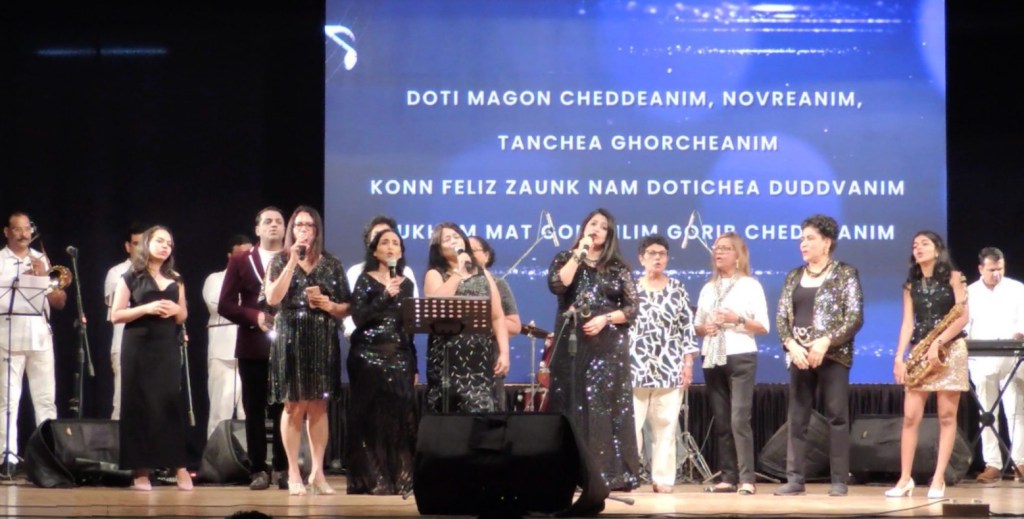
There were many more songs that could have been performed—such as Antonette’s early duets with Alfred Rose released on shellac in the 1960s, her collaborations with her late husband Romeo Mendes on their cassettes, or 1980s hits like Pipirmit and Mari Concessaum. However, barring the few mistakes and typos on the stage backdrop, this tribute was undoubtedly a heartfelt and fitting homage to a true legend. Fans of Cantaram may never feel entirely satisfied, but moments like these remind us to cherish what we have, especially when the music is honoured with the justice it deserves. By the end of the evening, it was clear that Robert Cabral of Kor Kantar fame had organized yet another unforgettable musical show.
The diversity of musical styles, the themes explored in the lyrics, and the mix of both young and veteran kantorists covering Antonette’s songs reflected the depth and legacy of her remarkable journey on the Konkani stage.
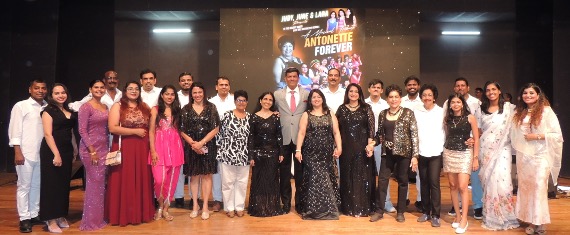
All photographs by Leaxan Freitas.

 Kantaram
Leave a comment