
Students set Goa’s Taj Mahal on fire, with their Tiatr performances.
Kala Academy, labeled by a local politician as Goa’s Taj Mahal, for over a year has been in the news for troubling reasons. With allegations of corruption in the renovation tender process, substandard renovation, leaking roof, poor equipment and a collapsed slab in the open air auditorium, Goans were vocal in their concern for the ailing platform of art and culture in Panjim. The building, designed by renowned architect Charles Correa is arguably Goa’s only modern heritage structure, accessible to the general public, that is worth preserving. Very few public buildings in Goa, that were constructed after December 1961, were designed with so much thought. Having visited the Taj Mahal in Agra, I would rather spend a day at the Kala Academy, with its airy corridors, wall high murals and neat nooks for sitting.
This month, the All Goa Inter Collegiate Tiatr Competition was underway and the students with their performances, brought much needed cheer to the overall sombre mood around Kala Academy. Six colleges from across Goa participated in the competition. For students, it was an opportunity to showcase their skills and for the audience, the pleasure of seeing young Goans carry forward a tradition.
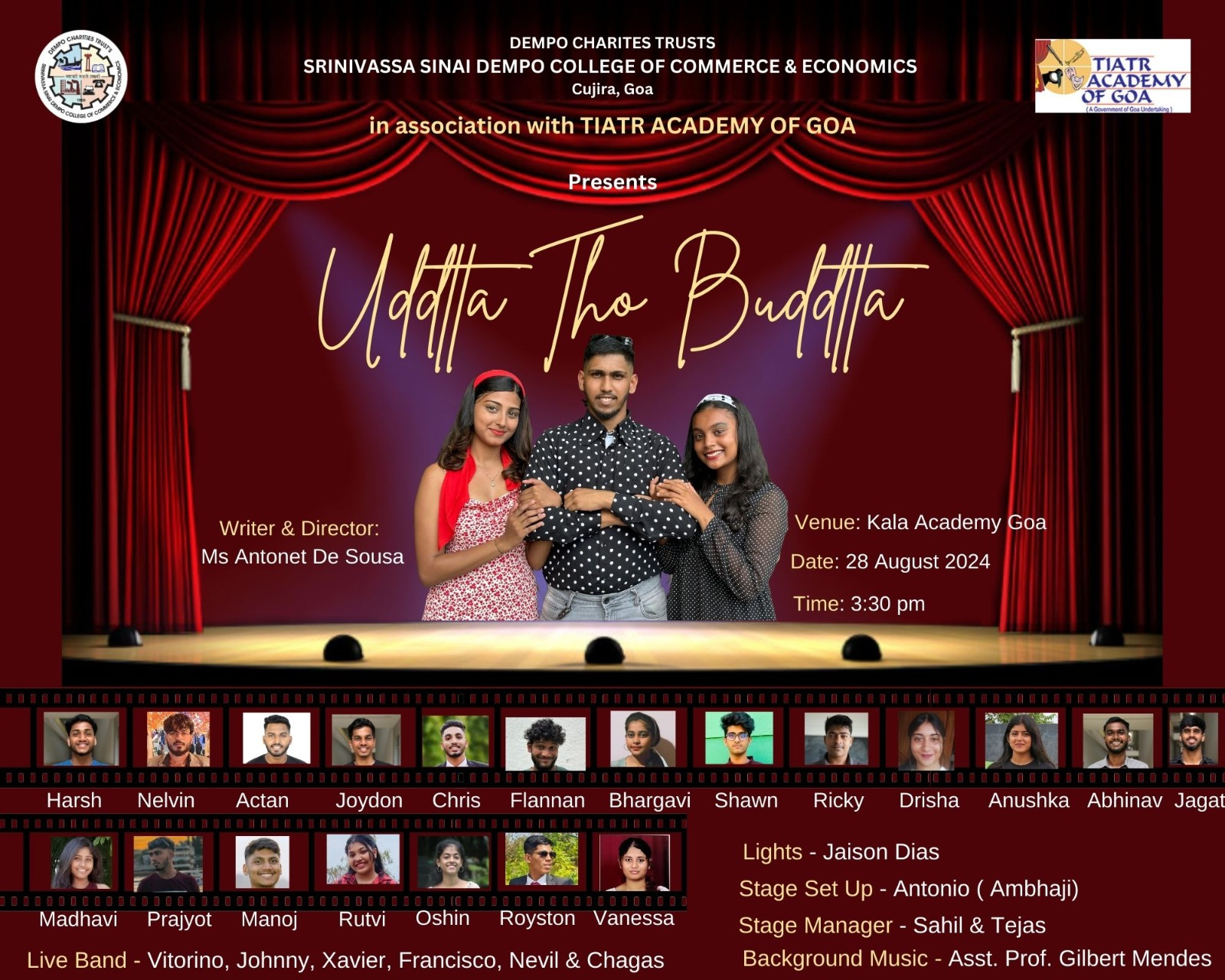


Tiatr, derived from the Portuguese word teatro (theatre in English) is a 132 year old Goan cultural expression. The language of the Tiatr is Konkani, that includes dialogues and Kantaram (songs). For the uninitiated, Pramod Kale, in his paper TIATR: Expression of the live, popular culture (1999) states that “Tiatr is a unique performing arts genre. It has elements of drama, music, comedy and improvisation. In a typical Tiatr performance, there is a loose story line which runs through the show. It is punctuated by ‘sideshows’-irrelevant and improvisational material consisting of songs (solos, duets and choruses called cantar), dances, comic skits and monologues-all to the accompaniment of a very loud Goan steel band which sits between the audience and the performers”.
Live recordings of tiatrs are generally not allowed, however, an exception is made for such competitions. I attended the inaugural tiatr “Uddtta Tho Buddtta”, written and directed by Antonet De Sousa and performed by students of S.S. Dempo College of Commerce & Economics.
The students put on an energetic show and I later learned from the director that they rehearsed for only one month. The acting as well as the singing showed that there is potential in today’s generation to carry forward the legacy of tiatr. Flannan Pereira, in his comedic role, was the star of the show for me.

While the opening scene was set in today’s time, the rest of the tiatr was set in the 1970s. Speaking to me after the tiatr, Antonet said “As I was thinking of a concept of what I should write for the college level, suddenly I remembered the days when we used to give so much importance to the tiatr and youngsters would wait for these dramas to come to their village. This time when I see youth, college students, they don’t have much interest in watching traditional dramas. So I thought, why don’t I write something that can take them to that era and make them think about how it was back then“
“In preparation for the tiatr, on day one, the students were given homework to find out what M. Boyer used to do?, what Rita Rose used to do?, how she would behave especially when she started singing?. They were also tasked with looking at costumes in old photos and videos before they were finalized.“

There were six pordhe (acts) to the play with Kantaram (songs) in between them. While the tiatrists standing in front of the curtain regaled the audience with their songs, behind the curtain was the frantic setting up of the stage for the next act.
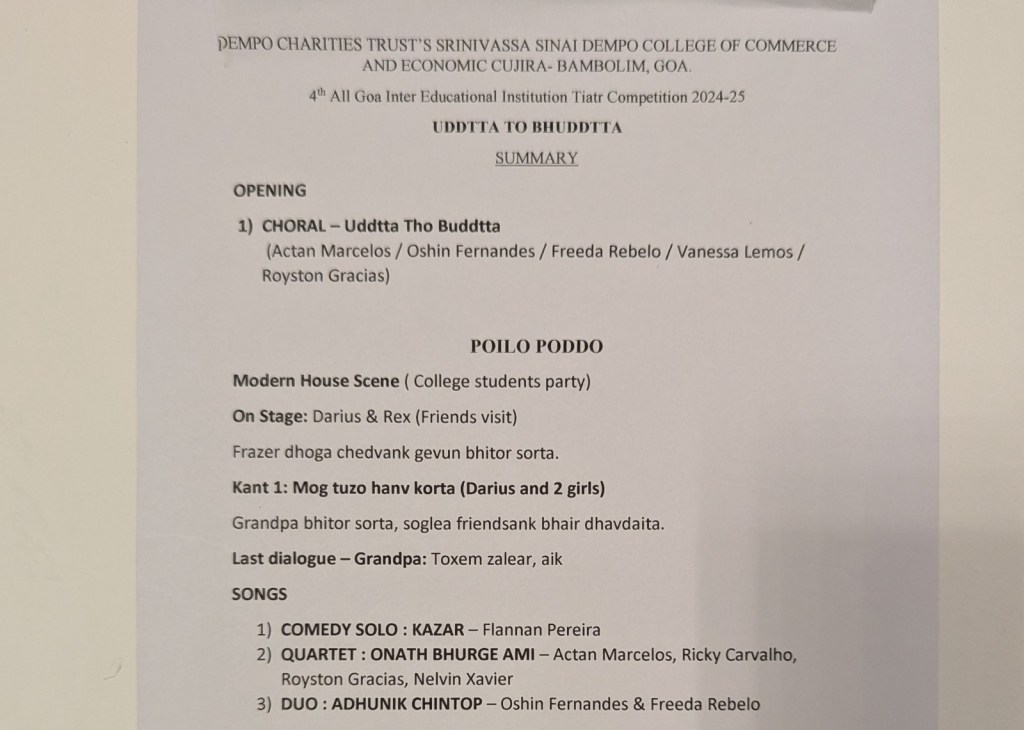


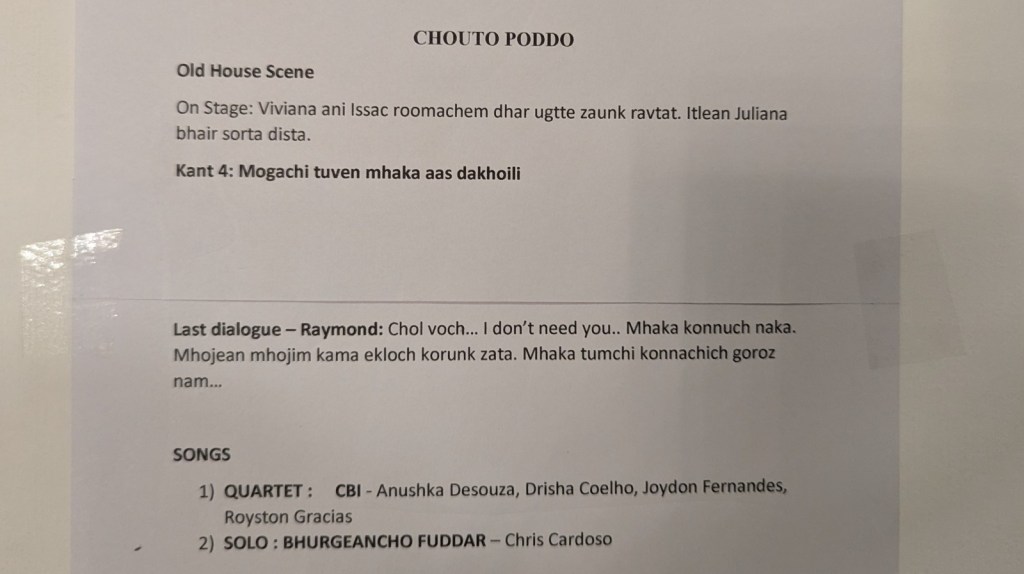
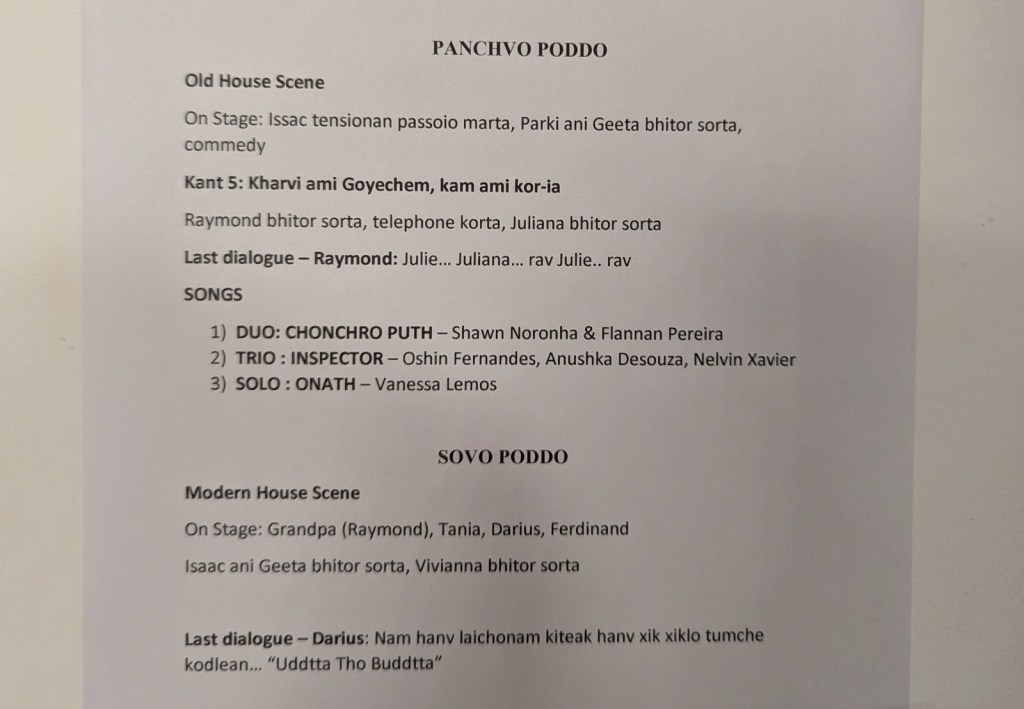
Sitting upfront in the second row, I got a closer look at the live band. While all the tiatrists on stage were young students, the band supporting them were not. The band arrived early, set up their instruments and the first beat of the drums kicked off the show.
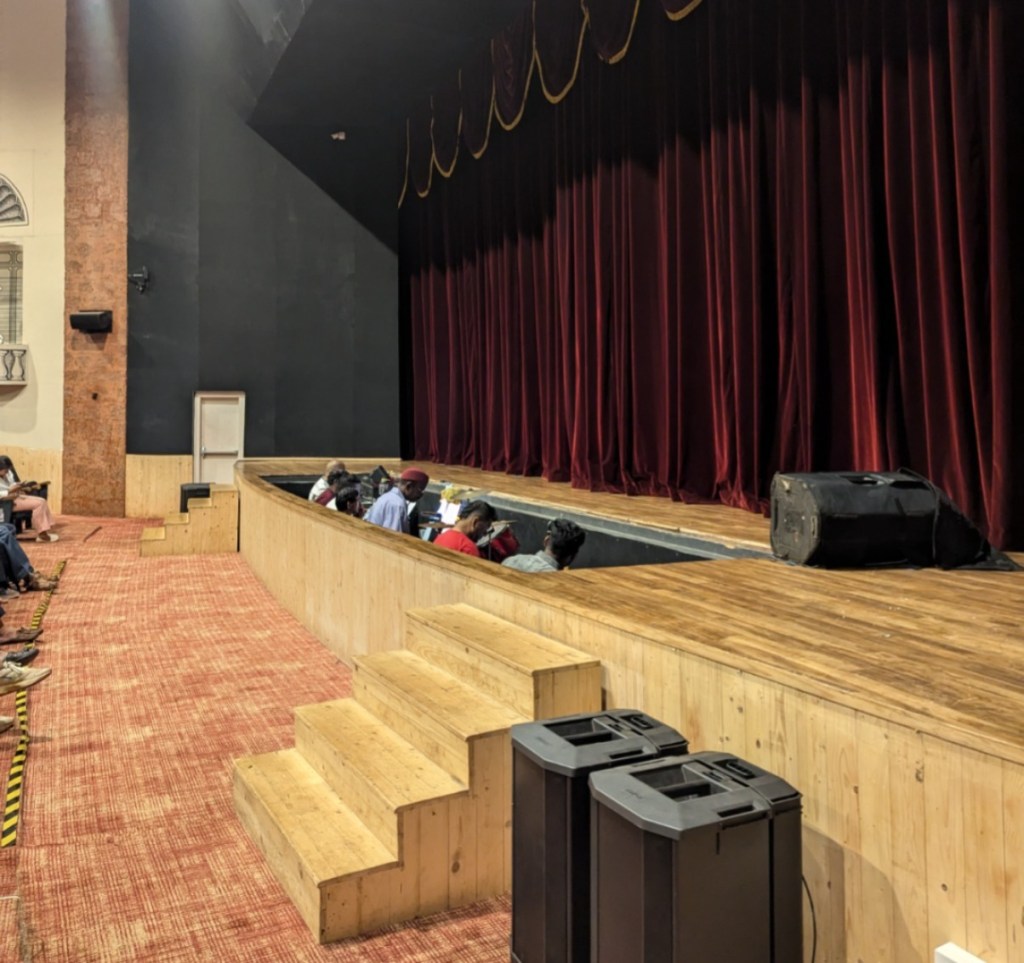
If you’ve been to a tiatr, you would have noticed that the audience can only see the heads of the band members, sticking out of the dugout. From left to right, the band consisted of a saxophone, two trumpets, drums, keyboard and a guitar. If you’re sitting in the audience, it’s hard to tell.
Tiatrs can run for longer than three hours and during the interval I caught up with a few members of the band. While most of the audience made their way to the canteen for refreshments, the band was hanging around in the dugout, talking with friends and other curious members of the audience.

With their sheet music in front of them, the band not only provides the music for the Kantaram, but also intervene at key moments to emphasize a moment on stage with a crash of the cymbals or the note from a trumpet. For me, the band is the heart beat of the tiatr, because a tiatr is as much about the kantaram as the stage acts, and the kantaram is as much about the music as the lyrics. In fact, take away the trumpets and saxophones, and it won’t sound like a kantaram. Over the years, while the public may have forgotten about the storyline of many tiatrs, the kantaram still live on and can be heard on the radio even today.
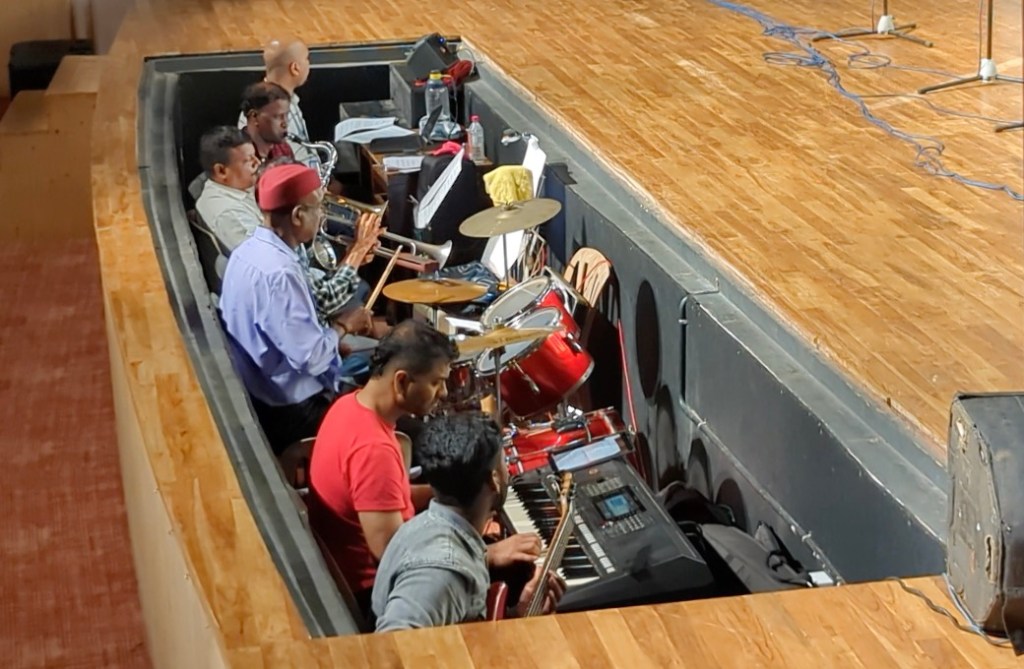
I caught up with Xavier, the drummer and Chagas, the saxophonist after the tiatr. Xavier mentioned that while there was a time when too many youngsters did not take up the trumpet, things have changed. People would associate the trumpet with funerals in the past (it is customary for brass bands to perform at funerals in Goa). However, at present there are many music schools across Goa where children are learning brass instruments. He has seen youngsters being given the opportunity to play for tiatrs and church feasts.
This point was proved a few days later. Another tiatr in the completion, ‘Chitrkar’, presented by students of St Xavier’s College – Mapusa, was supported by a band composed of students on the trumpet, drums and guitars and only one professional accompanying them helped write the score.
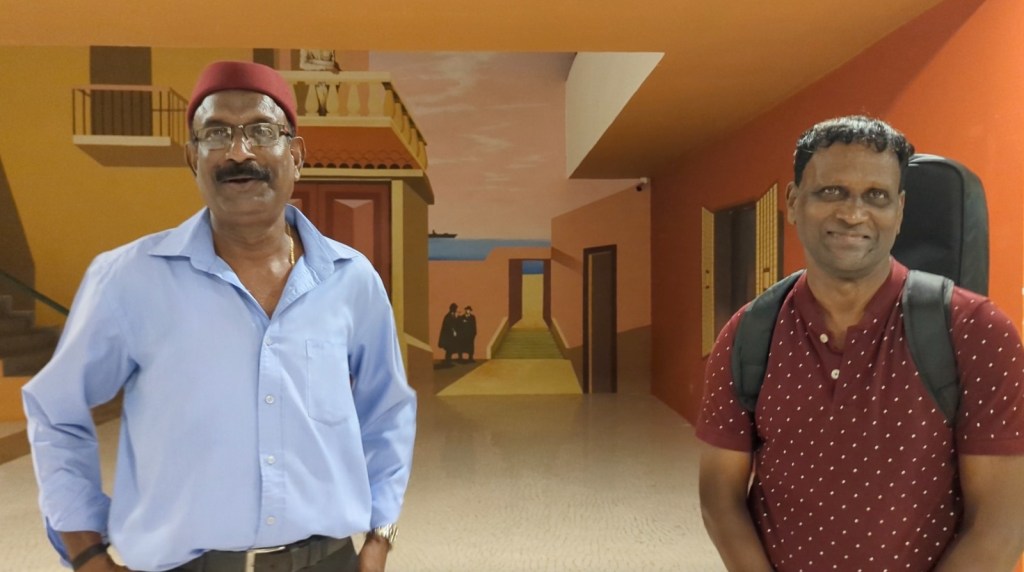
The band is not in the limelight on stage. In fact, they play in the shadows. However, their importance to this cultural phenomenon can’t be overlooked. At the end of a tiatr, when the audience has left and the actors are no longer celebrating backstage, the band is the last to leave.
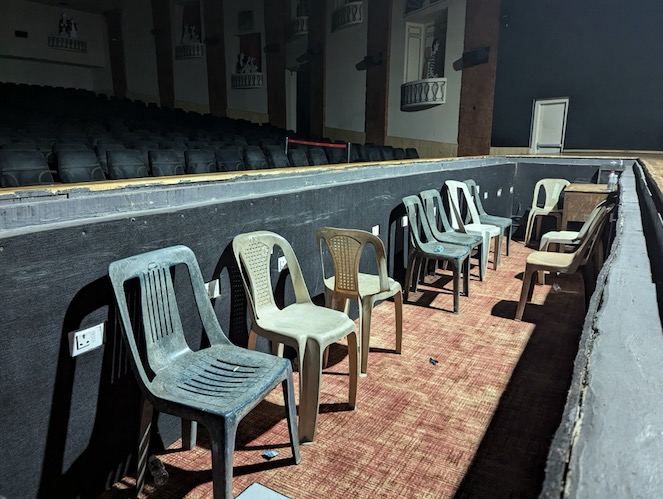
 Kantaram
Leave a comment